








Blog
Gallery Wall Ideas: 5 Simple Tips for a Balanced Home

Gallery wall ideas can help a room feel finished without a renovation. A thoughtfully planned display adds personality, color and balance to a living room or bedroom.
These gallery wall ideas will help you choose the right height, find a visual theme and arrange wall art so the result feels intentional. Use the steps as a starting point, then adapt them to your room and the art you love.
Before making holes, decide how you want the wall to feel: calm and symmetrical, or relaxed and collected. These gallery wall ideas work best when you plan around the room and furniture.
1. Gallery wall ideas start at eye level
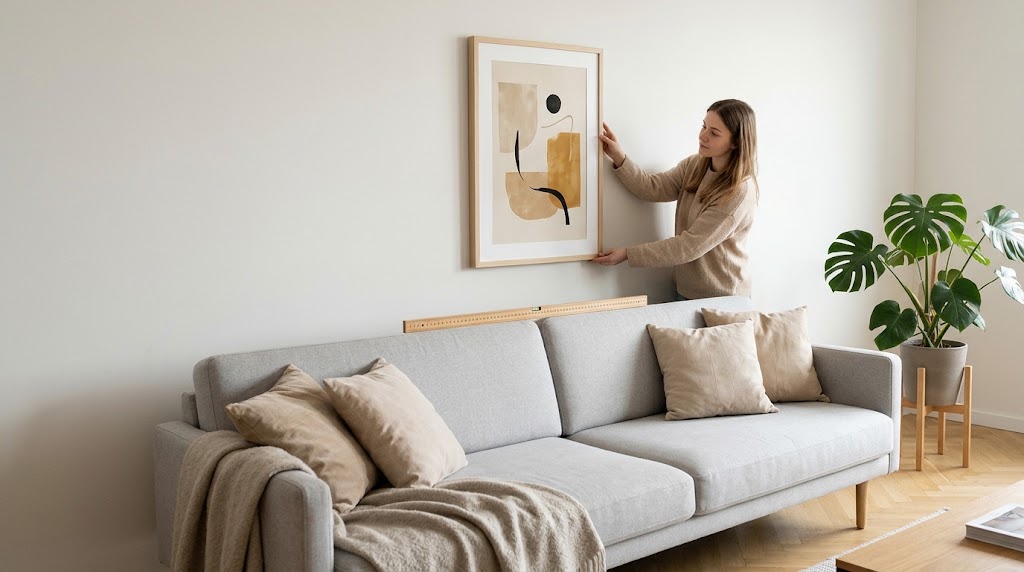
One of the most common gallery wall mistakes is hanging art too high. As a useful starting point, place the center of a single print or the center of the whole arrangement about 145–150 cm (57–59 in) above the floor. This keeps the display close to eye level when you are standing.
- Above a sofa, bed or console: Leave roughly 15–25 cm (6–10 in) between the furniture and the bottom edge of the artwork. The gap can be smaller or larger depending on the room and the scale of the display.
- Check the view: Sit and stand in the room before fixing the final position. The arrangement should feel connected to the furniture and comfortable to look at.
For more practical advice, read the McMaster Museum of Art guide to hanging artwork at home.
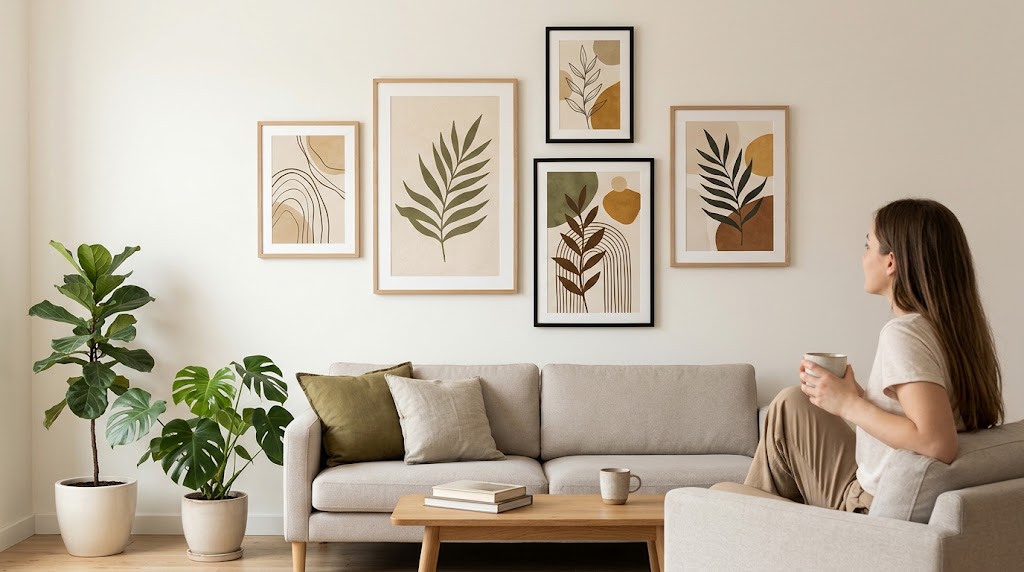
2. Choose a visual thread
A gallery does not need identical prints, but one repeated element helps it feel cohesive. Start with two or three colors already present in the room, such as warm beige, soft green and black. Then choose artwork that shares a mood or subject, from botanical illustrations to architectural photography.
Repeating a finish or frame color can also tie different images together. If you prefer an eclectic look, keep the palette simple; if the colors vary, use a more consistent style or spacing.
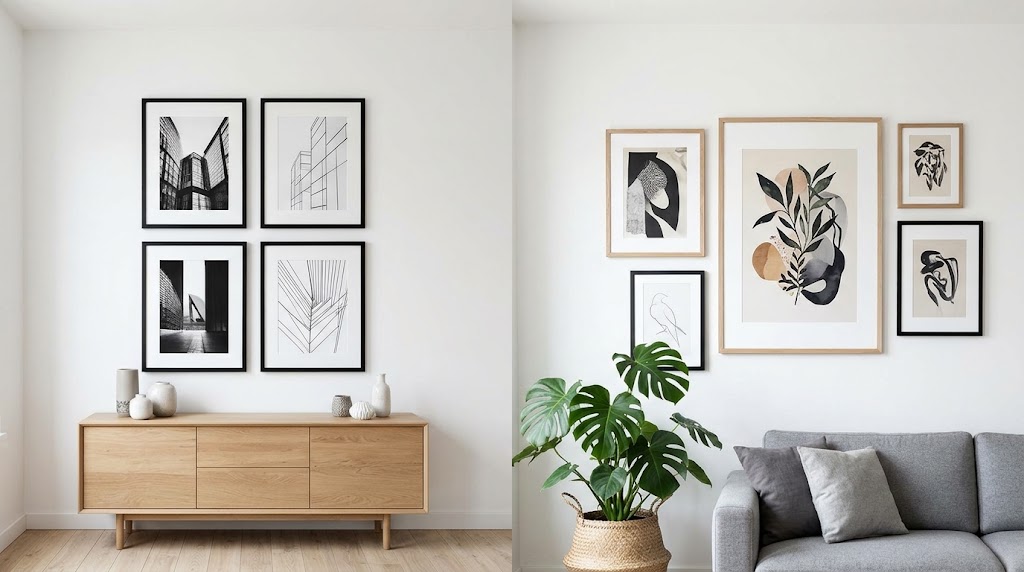
3. Pick a layout that suits your space
Among practical gallery wall ideas, a grid is a good choice if you like order. Use prints of the same size, line them up in even rows and keep the gaps consistent—around 5–7 cm (2–3 in) is a practical starting point.
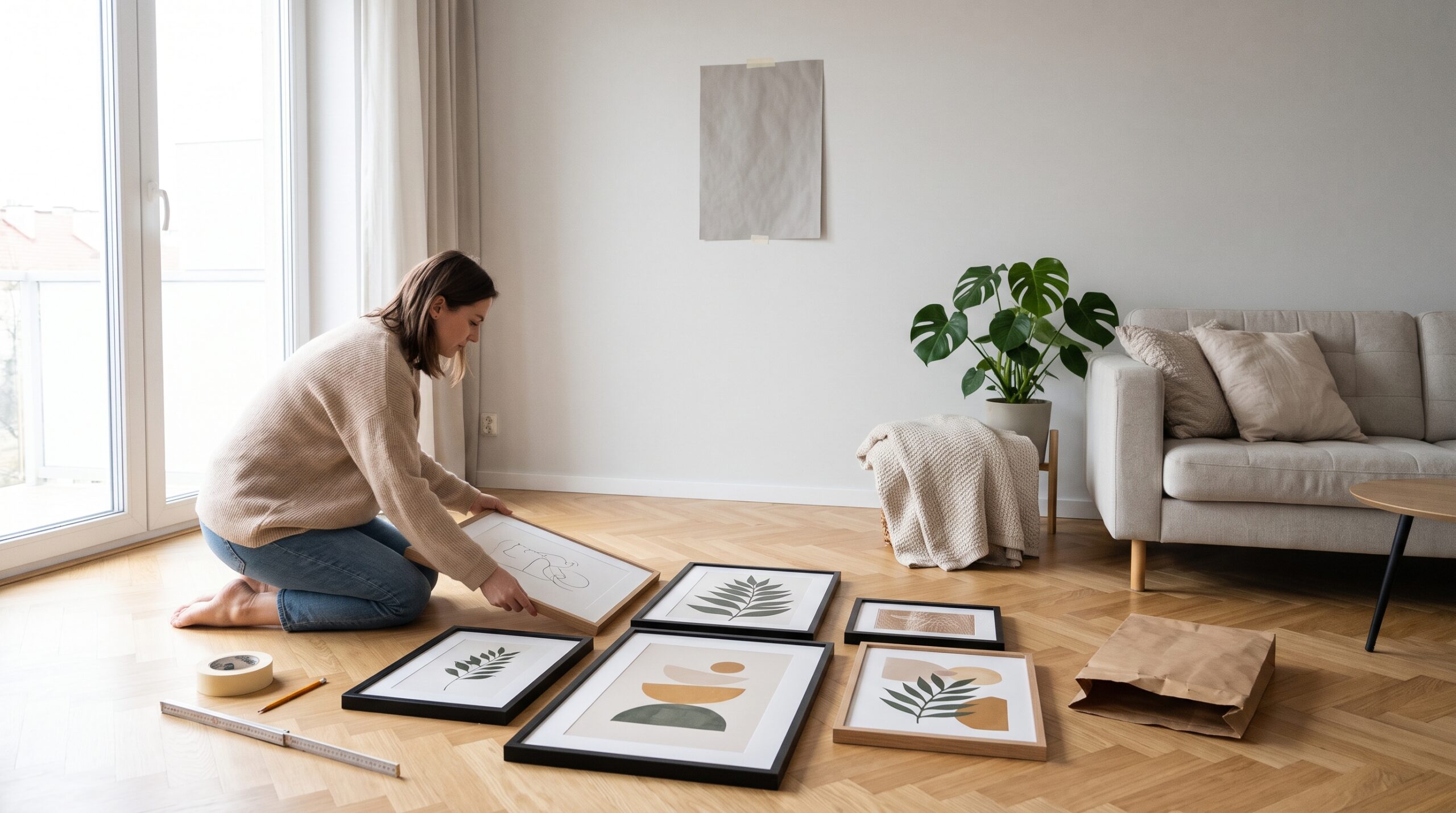
For a more relaxed gallery wall, begin with one larger piece and arrange smaller prints around it. Keep the overall outline balanced, even when the individual pieces have different sizes and orientations. Lay out the display on the floor first so you can move pieces around without rushing.
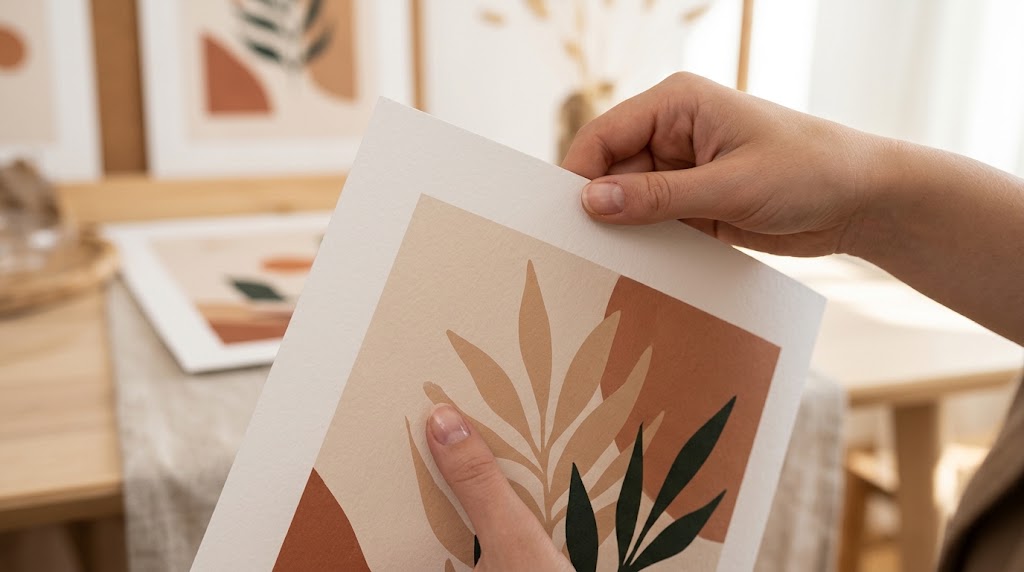
4. Choose print quality that suits your gallery wall
Paper and finish affect how wall art looks in different lighting. Check the paper details before you buy: a sturdier art paper can sit more smoothly in a frame, while a matte surface helps reduce reflections from windows and lamps. Satin finishes add a gentle sheen.
Natural and artificial light can change how colors appear. If possible, view the wall at different times of day and choose a finish that works with the light in your room.
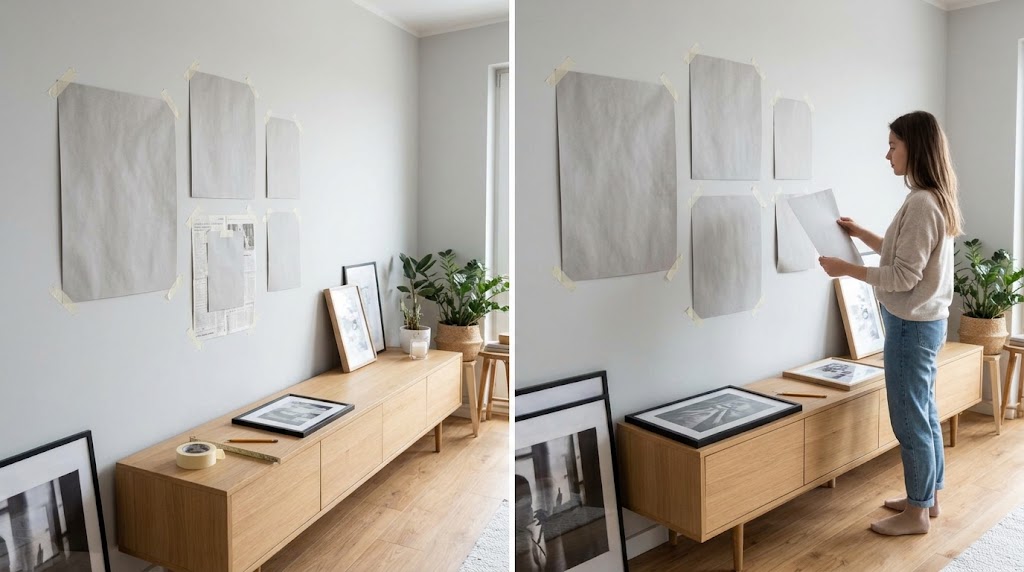
5. Test your gallery wall layout before you hang it
One of the easiest gallery wall ideas is to test the arrangement before hanging it. Arrange the prints on the floor in front of the wall. Try different positions and distances until the group feels balanced. You can also cut paper templates to match each print and attach them to the wall with painter’s tape. This lets you check the scale and spacing before making any holes.
Make the wall feel like yours
Your walls are a chance to show what you enjoy. Change the artwork over time, mix subjects you love and let the arrangement grow with the room. The best gallery wall is one that feels at home in your space.
Looking for inspiration? Explore posters for your home and find artwork to start planning your gallery wall.